Now I have comprehensive research from multiple authoritative sources. Let me compile this into a well-structured, SEO-optimized article that addresses all conversational queries while maintaining high readability and incorporating proper citations.
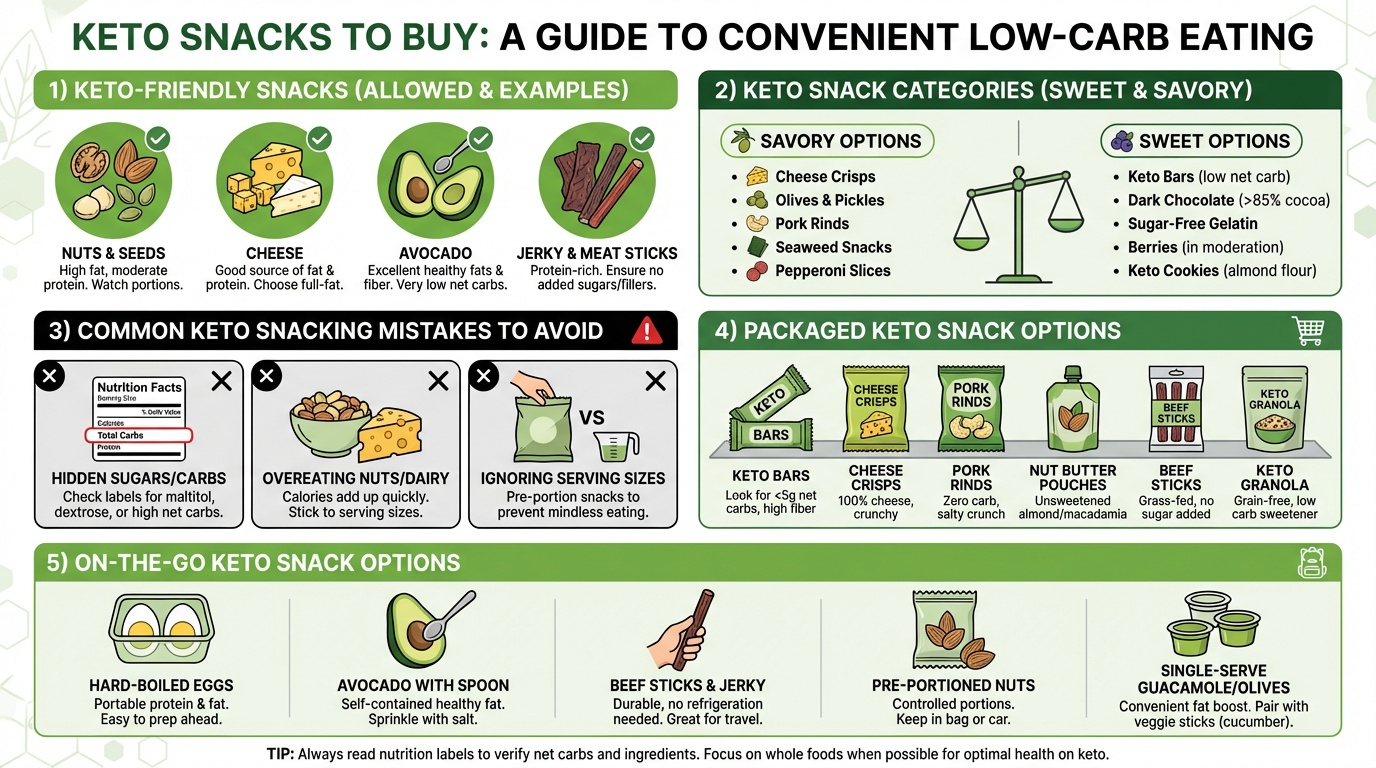
What Snacks Are Allowed on Keto?
When you’re following a keto diet, snacking becomes a strategic choice rather than a mindless habit. The fundamental rule is simple: choose snacks that are high in healthy fats, moderate in protein, and extremely low in carbohydrates. To maintain ketosis, you typically need to stay under 50 grams of total carbs per day or 20 to 30 grams of net carbs.
The best keto snacks fall into several key categories. Zero-carb foods like red meat, poultry, and fish make excellent foundations for snacking. Hard-boiled eggs contain just 1 gram of carbs and provide substantial protein and fat. Most cheeses offer similar macronutrient profiles, making them ideal grab-and-go options.
Beyond proteins, keto basics like cheese, avocados, olives, and macadamia nuts keep healthy fats front and center while minimizing carbs. Nuts deserve special attention—they’re convenient and nutrient-dense, but portions matter. Pecans (4.2g net carbs), macadamia nuts (8g net carbs), and walnuts (3.6g net carbs) per ounce are excellent choices, while cashews should be avoided due to their higher carb content.
Keto-Friendly Fruits for Snacking
Fruit consumption on keto requires careful selection. While avocados contain 8.5 grams of carbs and 7 grams of fiber per 100 grams, making them exceptionally keto-friendly, most other fruits are too high in carbs. When you do choose fruit, raspberries and blackberries are your best options, as they’re relatively low in carbs and high in fiber compared to other fruits.
Packaged Keto Snacks Worth Buying
The convenience factor of packaged snacks makes them invaluable for busy keto dieters. However, not all packaged options are created equal. Here are several proven packaged keto snack categories:
Protein-Focused Packaged Options
- Beef jerky and biltong: Look for brands without added sugars. Stryve Beef Biltong offers 16 grams of protein and zero sugar per serving, making it an excellent on-the-go choice.
- Epic Meat bars: Chicken sriracha and pulled pork varieties provide satisfying protein without the carb load.
- Beef stick products: Convenient, shelf-stable, and naturally keto-friendly.
Cheese and Dairy Snacks
- Cheese crisps: These snacks contain 12 grams of fat, 8 grams of protein, and less than 1 gram of carbohydrates per serving.
- Parmesan crisps: Baked aged cheddar delivers crunch without the guilt.
- String cheese and cheese cubes: Portable, satisfying, and portion-controlled.
Nut and Seed Options
- Mixed nuts: A quarter cup of mixed nuts provides approximately 15 grams of fat, 6 grams of protein, 6 grams of carbs, and 2 grams of fiber.
- Macadamia nuts: Low-carb powerhouses perfect for mindless snacking.
- Pumpkin and sunflower seeds: High in healthy fats and micronutrients.
Sweet Treats and Chocolate
- Dark chocolate (85% cocoa or higher): One square of 86% chocolate has just 2 grams of net carbs.
- Sugar-free chocolate bars: Quest and Perfect Keto brands offer satisfying options without keto disruption.
- Keto brownies and cookies: Increasingly available at health food stores and online retailers.
Keto Snack Recipes: Homemade Alternatives
Making snacks at home gives you complete control over ingredients and macronutrients. Here are some proven homemade keto snack recipes:
Savory Snack Recipes
Brie Crisps: This five-minute microwave wonder requires just brie and a few minutes. Portion slices on a microwave-safe plate and heat until crispy.
Mini Frittatas (Egg Muffins): Beat eggs with salt, pepper, and low-carb fillings like spinach, mushrooms, or cheese. Distribute into muffin cups and bake at 350°F for 15-20 minutes. Store in the fridge for grab-and-go convenience.
Salami Chips: Arrange salami slices on a baking sheet and bake until crispy for a protein-packed, zero-carb snack.
Cauliflower Hummus: Blend roasted cauliflower with tahini, olive oil, lemon juice, and spices for a dip that’s keto-friendly, unlike traditional chickpea-based hummus.
Pork Rinds (Chicharrones): Marinate pork belly cubes in lime, garlic, and oregano, boil until tender, then fry until crispy.
Sweet Keto Snack Recipes
Chocolate Peanut Butter Fat Bombs: Combine natural peanut butter, coconut oil, and dark chocolate. Pour into silicone molds and freeze for portion-controlled treats.
Keto Peanut Butter Bars: Mix peanut butter, butter, and powdered erythritol, then top with sugar-free chocolate. These no-bake treats satisfy sweet cravings instantly.
Strawberries with Whipped Cream: Dollop heavy whipping cream on fresh berries for a decadent yet simple snack. Fresh strawberries contain 8 grams of carbs and 2 grams of fiber per 100 grams, making them one of the few keto-friendly fruits.
Keto Ice Cream: Blend heavy cream, erythritol, and vanilla extract, then freeze. Skip the ice cream machine with this no-churn method.
Keto Snacks and Drinks
Beverage choices matter significantly on keto. Many popular drinks are deceptively high in carbs and should be avoided entirely.
Beverages to Avoid
Cafe lattes and cappuccinos contain substantial carbs from lactose—a 16-ounce latte has 18 grams of carbs. Juices, regular sports drinks, and vitamin waters are full of sugar and incompatible with ketosis.
Keto-Friendly Beverages
- Black coffee: Zero carbs, perfect as-is or with a splash of cream
- Unsweetened tea: Hot or cold, with or without cream
- Keto smoothies: Blend avocado, coconut, nut butter, and low-carb protein powder
- Bone broth: Some commercially prepared bone broths contain up to 10 grams of protein per cup, and you can boost fat content by adding butter or coconut oil
- Flavored sparkling water: Choose brands without artificial sweeteners if possible
Sweet and Savory Keto Snacks: Balance Your Cravings
The beauty of keto snacking is the variety available across taste preferences. Both sweet and savory options help maintain dietary adherence.
Savory Snacking Options
| Snack | Macros | Benefit |
|---|---|---|
| Olives (1 oz) | 15g fat, 4g carbs | Heart-healthy monounsaturated fats |
| Pepperoni slices | 9g fat, 0g carbs | Zero-carb, salty satisfaction |
| Dill pickle wraps | 5g fat, 1g carbs | Tangy flavor, ultra-low carb |
| Roasted seaweed | 3g fat, 1g carbs | Mineral-rich, crunchy alternative |
| Pork rinds (1 oz) | 9g fat, 0g carbs | Satisfying crunch, zero carbs |
Sweet Snacking Options
Beyond traditional desserts, you can satisfy sweet cravings with:
- Berries with cream: One-half cup of raspberries contains just 7 grams of carbs, 4 grams of which is fiber
- Keto dessert bars: Energy bars sweetened with monk fruit or erythritol
- Coconut-based treats: Coconut flour muffins or coconut chips
- Nut butter snacks: Almonds dipped in dark chocolate or no-bake peanut butter bites
Keto Snack Options On The Go
Travel and busy schedules demand portable solutions. The best on-the-go keto snacks require no refrigeration and minimal preparation.
Ideal Travel Snacks
Individual olive packs: Pre-portioned, no preparation needed, long shelf life.
Nuts in single servings: Purchase pre-packaged portions to avoid overeating.
Beef jerky: Choose low-sodium, grass-fed options when possible. Many commercial brands contain hidden sugars, so check labels carefully.
Hard-boiled eggs: Prepare ahead and store for up to a week. Transport in a cooler if needed.
Cheese and crackers alternative: Pack cheese cubes with pork rinds instead of traditional crackers for a satisfying combo.
Deli roll-ups: Roll turkey, ham, or roast beef with cheese for a protein-packed keto snack on the go.
String cheese: Individually wrapped, portable, and portion-controlled.
Almonds or macadamia nuts: Shelf-stable and satisfying in small handfuls.
Dark chocolate squares: Keep 85% cacao or higher bars in your bag for sweet moments.
Common Keto Snacking Mistakes to Avoid
Even well-intentioned keto dieters can derail their progress with snacking mistakes.
Mistake #1: Buying Regular Junk Food
Common snacks like chips, nachos, donuts, and candy bars aren’t just incompatible with keto—they’re incompatible with good health. These foods spike blood sugar and knock you out of ketosis.
Mistake #2: Consuming Too Many Carbs Through “Hidden” Sources
Many snack foods contain carbs you might not realize—dried fruit like raisins and cranberries has a higher concentration of sugar than fresh fruit because the sugar gets concentrated in a small serving size. Additionally, some sweeteners get hidden behind different names on product labels, such as ingredients ending in “ose” (maltose, lactose) or any type of cane, malt, or syrup.
Mistake #3: Eating Oversized Portions
Mistake #4: Snacking Too Frequently
A keto diet is designed to ensure you feel full all of the time, and snacks shouldn’t be part of your normal routine. Constant snacking prevents your body from achieving or maintaining ketosis. If you’re frequently hungry, examine your main meals—add more protein and fat to increase satiety.
Mistake #5: Neglecting Protein-Rich Options
Protein isn’t your enemy on keto. High-protein snacks like edamame hummus, turkey roll-ups, and cottage cheese actually help curb cravings and maintain lean muscle.
Mistake #6: Consuming Too Many Saturated and Trans Fats
Healthy fats should be your primary ingredients in snacks and meals—focus on polyunsaturated and monounsaturated fats found in fatty fish, avocado, and nuts. Read food labels to check saturated fat levels.
Mistake #7: Overlooking “Keto” Versions of Sweets
A major pitfall: purchasing keto or low-carb versions of cakes, cookies, chocolate bars, and candies. These snacks might maintain cravings for a sugary taste and can make you eat more than you need, causing weight loss to slow or stall.
Mistake #8: Completely Avoiding Fruits
You shouldn’t restrict your carb intake so much that you avoid eating fruits—fruits are important to your health as they contain fiber and micronutrients essential to healthy digestion. Choose keto-friendly options like raspberries, blackberries, and strawberries in moderation.
Building Your Keto Snacking Strategy
Success on the keto diet requires planning. Here’s how to build sustainable snacking habits:
Prep Ahead: Dedicate time weekly to prepare snacks like mini frittatas, brie crisps, or pork rinds. Store in your fridge for grab-and-go convenience.
Stock Strategically: Keep your pantry stocked with shelf-stable keto snacks for unexpected hunger or travel situations.
Track Your Intake: Monitor your net carb consumption from snacks to ensure you stay within your daily limits.
Choose Satisfying Combinations: Pair protein with fat—nuts with cheese, jerky with olives, or celery with nut butter.
Avoid Trigger Foods: If certain snacks lead to overeating, skip them entirely. There are plenty of alternatives.
FAQ
Can I snack frequently on keto?
Ideally, you shouldn’t snack every day. The major benefit of keto is that it often prevents hunger for hours after meals. If you regularly need snacks, try adding more protein and calories from fat to your main meals.
What’s the best way to measure snack portions on keto?
Aim for 100-200 calorie snacks that contain minimal carbs (under 5g net carbs). Use food labels and tracking apps to monitor your exact macronutrients.
Are quest bars truly keto-friendly?
Many Quest bars contain 20 grams of protein and only 3 net carbs per serving, making them keto-compliant. However, check individual labels as formulations vary by flavor.
Can I eat fruit snacks on keto?
Most fruit snacks are too high in carbs. Stick to whole low-carb fruits like raspberries, blackberries, and strawberries in small portions.
What should I look for on packaged snack labels?
Check for net carbs (total carbs minus fiber), sugar content (ideally 0-1g), and ingredient quality. Avoid foods listing sugar, grains, vegetable oils, or artificial sweeteners as primary ingredients.
Is it better to make snacks at home or buy them packaged?
Homemade snacks give you complete control over ingredients. However, packaged options are invaluable for convenience and travel. A balanced approach works best.
How do I handle snack cravings on keto?
Identify whether you’re experiencing true hunger or a craving for sugar. Often, increasing water intake and electrolytes resolves cravings. If you’re genuinely hungry, choose a protein-fat combination like cheese and nuts.
What’s the difference between net carbs and total carbs on keto?
Net carbs equal total carbs minus fiber. Since fiber doesn’t impact blood sugar, keto dieters typically count net carbs. To stay in ketosis, most people aim for 20-30 grams of net carbs daily.
Sources
- WebMD: Tips for Snacks if You’re on a Keto Diet
- Healthline: The 30 Best Keto Snacks
- Medical News Today: The best keto-friendly snacks
- Diet Doctor: Keto Snacks – A Visual Guide to the Best and the Worst
- PlantRaw: 8 Keto Snack Buying Mistakes and How to Avoid Them
- Delish: 45 Best Keto Snacks To Make
- Delish: The 25+ Best Store-Bought Keto Snacks Money Can Buy
- AllRecipes: 20 Keto Desserts to Curb Your Cravings
- Everyday Health: 9 Grab-and-Go Keto Snacks: Pecans, Jerky, Olives, and More
- Fit Men Cook: Keto Friendly Snacks for Beginners
Leave a Reply