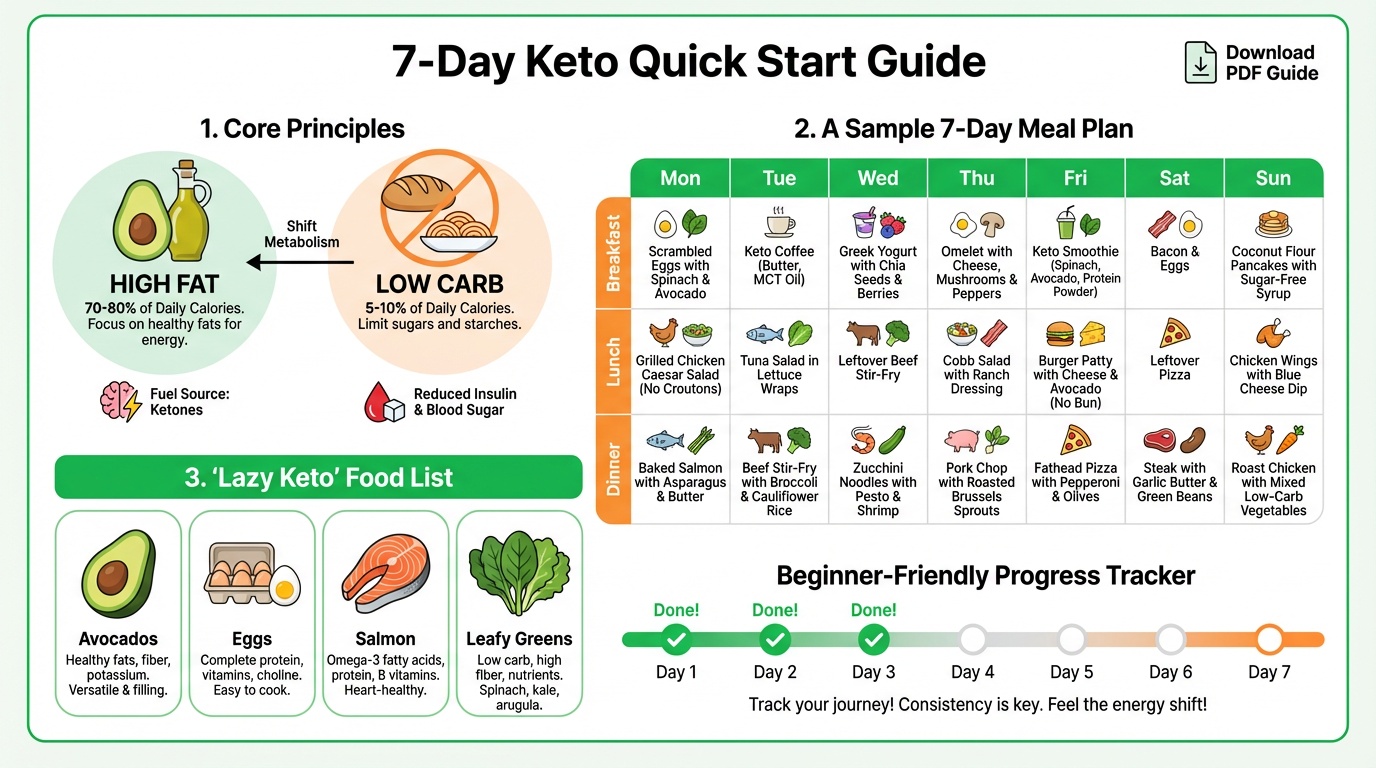
Starting a ketogenic diet doesn’t have to cost you anything. Whether you’re looking for a free keto diet plan PDF, a complete beginner’s guide, or a lazy keto food list, there are plenty of resources available at no cost that can help you transform your health and reach your goals. This comprehensive guide brings together the best free resources, practical meal plans, and actionable tips to help you start your keto journey today without spending a dime on expensive programs or subscriptions.
What Is the Keto Diet and How Does It Work
The ketogenic diet is a very low carbohydrate, high fat diet that puts your body into a metabolic state called ketosis. When you dramatically reduce your carb intake to typically less than 50 grams per day and replace those carbohydrates with fat, your body shifts from using glucose as its primary fuel source to burning stored fat for energy instead Diet Doctor.
During ketosis, your liver converts fat into ketones, which become your brain’s main energy source. This metabolic switch offers numerous potential health benefits, including significant weight loss, improved blood sugar control, enhanced mental clarity, and reduced hunger pangs Healthline. Many people find that once they reach ketosis, the constant hunger and food cravings that plague traditional diets simply disappear, making the keto diet remarkably sustainable for long-term success.
The standard ketogenic diet follows a macronutrient breakdown of approximately 70% fat, 20% protein, and only 10% carbohydrates Healthline. This ratio ensures that your body remains in ketosis while still getting enough protein to maintain muscle mass and keep you feeling satisfied after meals. Understanding these basics is essential before diving into any meal plan, as it helps you make informed decisions about food choices and portion sizes throughout your journey.
How to Start a Keto Diet at Home for Free
Starting keto at home for free is entirely achievable with the right approach and resources. The first step involves cleaning out your kitchen of high-carb foods that would kick you out of ketosis, including bread, pasta, rice, potatoes, sugary snacks, and processed foods Diet Doctor. This kitchen clean-out process might seem daunting, but it dramatically increases your chances of success by removing temptation and setting you up for a smooth transition.
Stocking your kitchen with keto-friendly foods doesn’t have to break the bank either. Focus on purchasing eggs, which are virtually carb-free and incredibly versatile for breakfast, lunch, or dinner Perfect Keto. Add affordable proteins like chicken thighs, ground beef, and bacon, along with fatty fish like sardines and canned salmon, which provide essential omega-3 fatty acids and vitamin D Perfect Keto. Fill your vegetable crisper with low-carb options like spinach, broccoli, cauliflower, and zucchini, all of which can be purchased fresh or frozen at reasonable prices.
The beauty of starting keto at home for free lies in the abundance of no-cost resources available online. Major keto education websites offer free meal plans, shopping lists, recipes, and comprehensive beginner guides that walk you through every step of the process Diet Doctor. These resources are written and reviewed by medical professionals, ensuring that the advice you receive is both safe and effective. You don’t need expensive supplements, specialized meal delivery services, or fancy kitchen equipment to succeed on keto—all you need is basic knowledge, a grocery store, and commitment to the process.
Your Free 7-Day Keto Meal Plan
The following 7-day meal plan provides approximately 15 grams of net carbohydrates per meal and 5 grams or less per snack, keeping you well within the range needed to maintain ketosis University of Wisconsin Family Medicine. Each day includes breakfast, lunch, dinner, and optional snack suggestions, along with a complete shopping list to make your grocery trip efficient and budget-friendly.
Day 1
Breakfast: Scrambled eggs with shredded cheese, sautéed vegetables including cherry tomatoes, kale, and mushrooms, topped with 1/4 avocado. Drink 6 ounces of Fairlife milk and 8 ounces of coffee or tea.
Lunch: Large salad with 2 cups greens, cherry tomatoes, red onion, and cucumber, topped with 2 ounces diced turkey, 1 hard-boiled egg, 1 ounce shredded cheese, 2 tablespoons vinaigrette, and 1 tablespoon lemon juice. Drink 16 ounces of water.
Dinner: 3-ounce hamburger with 1 ounce cheese slice, thick tomato and onion slices, and pickle spears, eaten without a bun or wrapped in large iceberg lettuce. Drink 16 ounces of water.
Optional Snack: 1 ounce almonds
Day 2
Breakfast: 3/4 cup Greek yogurt (plain or Two Good brand) with 1 cup mixed berries including strawberries, raspberries, and blackberries. Drink 6 ounces of Fairlife milk and 8 ounces of coffee or tea.
Lunch: Tuna salad wrap using a Mission carb-balanced tortilla, filled with lettuce, tomato, and onion, plus 1 cup cucumber slices with 2 tablespoons low-fat ranch dressing. Drink 16 ounces of water.
Dinner: 3-ounce chicken breast with 2 tablespoons pesto, served over 2 cups roasted broccoli with 2 tablespoons shredded parmesan cheese. Drink 16 ounces of water.
Optional Snack: 1/2 cup cottage cheese
Day 3
Breakfast: Breakfast burrito with 2 eggs, shredded cheese, sautéed bell peppers and onion, wrapped in a Mission carb-balanced tortilla with 2 tablespoons salsa and 2 tablespoons guacamole. Drink 6 ounces of Fairlife milk and 8 ounces of coffee or tea.
Lunch: Chicken salad with tomato, onion, and avocado on 2 large lettuce leaves, served with 1 pickle spear and 1 cup celery sticks with 1 tablespoon low-fat ranch. Drink 16 ounces of water.
Dinner: Spiralized zucchini “noodles” topped with Gardein Meatless Meatballs and 1/2 cup low-carb marinara sauce, finished with shredded cheese. Drink 16 ounces of water.
Optional Snack: 1 ounce string cheese
Day 4
Breakfast: Berry smoothie made with 3/4 cup Greek yogurt, 1/2 cup mixed berries, and unsweetened almond milk. Drink 8 ounces of coffee, tea, or water.
Lunch: 1/2 cup chicken salad made with tomato, onion, and avocado, served on 2 large lettuce leaves with 1 cup celery sticks. Drink 16 ounces of water.
Dinner: 3 to 4-ounce salmon fillet with lemon, served with 2 cups asparagus cooked with garlic and 1 cup spinach salad with 1 ounce cheese and vinaigrette. Drink 16 ounces of water.
Optional Snack: 1 hard-boiled egg
Day 5
Breakfast: 2-egg omelet with shredded cheese and 1 cup sautéed vegetables including tomatoes, peppers, and onions. Add 2 tablespoons salsa. Drink 6 ounces of Fairlife milk and 8 ounces of coffee or tea.
Lunch: Large salad with 2 cups greens, 1/2 cup cottage cheese, 1 ounce pecans or sunflower seeds, 1 ounce shredded cheese, and 2 tablespoons vinaigrette. Drink 16 ounces of water.
Dinner: Sheet pan dinner with 2 ounces sausage and vegetables including cherry tomatoes, bell pepper, and yellow squash, roasted until tender. Drink 16 ounces of water.
Optional Snack: 1 ounce almonds
Day 6
Breakfast: 3/4 cup Greek yogurt with 1 cup mixed berries. Drink 6 ounces of Fairlife milk and 8 ounces of coffee or tea.
Lunch: Egg salad wrap on a Mission carb-balanced tortilla with lettuce, tomato, and onion, plus 1 cup cucumber slices with low-fat ranch. Drink 16 ounces of water.
Dinner: Lettuce-wrap tacos with 3 ounces lean ground beef, 1/3 cup black beans, 1/2 cup sautéed bell peppers and onions, and shredded cheese on 2 large romaine lettuce leaves with 2 tablespoons salsa and sour cream. Drink 16 ounces of water.
Optional Snack: 1 ounce string cheese
Day 7
Breakfast: Egg “nests” with spiralized, sautéed zucchini and 2 eggs, seasoned with garlic and onion, plus 1/4 avocado. Drink 6 ounces of Fairlife milk and 8 ounces of coffee or tea.
Lunch: Ham, cream cheese, and pickle rollups using 2 ounces sliced ham, 2 tablespoons cream cheese, and 1 to 2 pickle spears, plus string cheese and 1 cup side salad with 1 tablespoon vinaigrette. Drink 16 ounces of water.
Dinner: Stir fry with 2 cups riced cauliflower, 3 ounces tofu or chicken, 1/4 cup green onion, and 2 tablespoons low-sodium soy sauce with spices. Drink 16 ounces of water.
Optional Snack: 1 ounce sunflower seeds
Complete Keto Food List for Beginners
Understanding what foods to eat and avoid is fundamental to succeeding on a ketogenic diet. The good news is that many delicious, satisfying foods are perfectly aligned with keto principles, making the transition easier than you might expect.
Foods to Eat on Keto
Meats and Proteins: All types of meat are essentially carb-free and should form the foundation of your keto diet. This includes beef, pork, lamb, chicken, turkey, and game meats Perfect Keto. Eggs are particularly valuable as they’re versatile, affordable, and virtually carb-free at only 0.4 grams per egg. Fatty fish like salmon, mackerel, and tuna provide not only protein but also heart-healthy omega-3 fatty acids that support reduced inflammation and better metabolic health Perfect Keto.
Dairy Products: Full-fat dairy is encouraged on keto because it provides satisfying fats without adding carbohydrates. Stock up on butter (0.1 grams carbs per 100 grams), heavy cream (3 grams carbs per 100 grams), cream cheese (1 gram carbs per tablespoon), and hard cheeses like cheddar (1.3 grams carbs per 100 grams) Perfect Keto. Plain Greek yogurt offers about 5 grams of carbs per 100 grams and makes an excellent base for smoothies or a protein-rich snack.
Non-Starchy Vegetables: These nutrient-dense foods should appear at every meal to provide fiber, vitamins, and minerals while keeping carbs low. Top choices include spinach (2 grams net carbs per 100 grams), broccoli (4 grams net carbs per 100 grams), cauliflower (3 grams net carbs per 100 grams), zucchini (2 grams net carbs per 100 grams), asparagus (2 grams net carbs per 100 grams), and bell peppers (about 6 grams net carbs per pepper) Perfect Keto. Above-ground vegetables generally contain fewer carbohydrates, so prioritize green varieties over colorful ones.
Healthy Fats and Oils: Keto is a high-fat diet, so embrace fats as a primary energy source. Excellent choices include extra virgin olive oil, avocado oil, coconut oil, butter, ghee, and MCT oil Perfect Keto. These fats enhance the absorption of fat-soluble vitamins A, D, E, and K, supporting overall wellness and making meals more satisfying.
Nuts and Seeds: While portion-controlled due to their calorie density, nuts and seeds fit perfectly into keto eating. Macadamia nuts lead the pack at only 2 grams net carbs per 1/4 cup serving, followed by Brazil nuts, pecans, and walnuts at 1 gram net carbs per 1/4 cup Perfect Keto. They’re excellent sources of fiber, plant protein, and minerals.
Low-Carb Fruits: Most fruits are too high in sugar for keto, but berries make an exception. Avocado provides just 2 grams net carbs per 100 grams and delivers healthy monounsaturated fats Perfect Keto. Blackberries and raspberries offer about 5 grams net carbs per 100 grams, making them suitable in moderation. A typical daily allowance is about 1/2 cup of berries, which satisfies sweet cravings without breaking ketosis University of Wisconsin Family Medicine.
Foods to Avoid on Keto
High-carbohydrate foods must be eliminated or drastically reduced to maintain ketosis. Sugary foods like soda, fruit juice, cake, cookies, and ice cream cause rapid blood sugar spikes and immediately knock you out of ketosis Healthline. Even natural sweeteners like honey and maple syrup should be avoided, as should sugar-free foods that contain artificial sweeteners and fillers.
Grains and starches are also off-limits, including wheat-based bread, pasta, rice, cereal, and oats Healthline. Starchy vegetables like potatoes, sweet potatoes, corn, and peas contain too many carbohydrates. Legumes including beans, lentils, and chickpeas must also be avoided, despite their nutritional benefits in other contexts.
Most fruits are too high in sugar for keto, including apples, bananas, grapes, mangoes, and melons Healthline. Fruit juice, even unsweetened varieties, concentrates the sugar and should be eliminated. Processed vegetable oils like canola, soybean, sunflower, and safflower oil contain inflammatory omega-6 fatty acids and should be replaced with healthier options Perfect Keto.
What Is Lazy Keto and How to Get Started
Lazy keto is a simplified approach to the ketogenic diet that eliminates the need for meticulous tracking of calories, macronutrients, and food scales. Instead of counting every gram of fat, protein, and carbohydrate, lazy keto focuses primarily on keeping carbohydrate intake below a certain threshold, typically around 20 to 50 grams of net carbs per day Diet Doctor. This approach appeals to beginners who find traditional tracking overwhelming or unsustainable long-term.
The philosophy behind lazy keto is that if you simply eat whole, unprocessed foods that naturally fall within keto guidelines, you’ll naturally consume the right macronutrient ratios without constant calculation Diet Doctor. A typical lazy keto day might include eggs and bacon for breakfast, a salad with chicken and olive oil dressing for lunch, and salmon with roasted vegetables for dinner, along with snacks like cheese, nuts, or hard-boiled eggs when hunger strikes.
For those wondering whether there’s a free lazy keto food list PDF available, several websites offer printable guides that categorize foods as “keto-friendly” or “avoid” without requiring detailed macro tracking Pinterest. These simplified lists help lazy keto practitioners quickly identify foods that fit their eating style while avoiding the need for constant nutritional analysis. The key is building meals around protein sources, healthy fats, and low-carb vegetables without overcomplicating the process.
Sample Lazy Keto Day
A typical lazy keto meal plan requires minimal preparation and decision-making. For breakfast, you might enjoy scrambled eggs cooked in butter with a side of bacon or sausage Diet Doctor. If you’re not hungry in the morning, skipping breakfast entirely and having your first meal at lunch is perfectly acceptable on lazy keto—just enjoy black coffee or tea with a splash of heavy cream if desired.
Lunch on lazy keto can be as simple as no-cook options like sliced deli meats wrapped around cheese, a handful of nuts, and raw vegetable sticks with guacamole Diet Doctor. These require zero cooking and can be assembled in minutes, making them ideal for busy days or beginners who want to ease into the diet gradually.
Dinner on a lazy keto day might involve cooking one protein source like chicken thighs or ground beef and pairing it with whatever low-carb vegetables you have on hand Diet Doctor. The simplicity of lazy keto lies in its flexibility—if you know a food is low in carbs and high in fat or protein, you can include it without second-guessing your choices.
Essential Tips for Keto Beginners
Starting a ketogenic diet successfully requires understanding both the principles of the diet and the practical realities of daily life. These tips will help you navigate common challenges and set yourself up for long-term success.
Prepare for the Keto Flu
During your first week on keto, you may experience what’s commonly called “keto flu”—a collection of symptoms including fatigue, headaches, brain fog, and digestive discomfort as your body adapts to using fat for fuel instead of glucose Healthline. This transition period is temporary and can be minimized by drinking plenty of fluids and ensuring adequate salt intake Diet Doctor. Adding a cup of bone broth daily and salting your food generously can make a significant difference in how you feel during the adjustment period.
Master Food Label Reading
Before starting keto, familiarize yourself with reading nutrition labels to identify hidden carbohydrates and added sugars Healthline. Pay particular attention to serving sizes, as many products contain more than one serving per container. Calculate net carbs by subtracting fiber from total carbohydrates, and watch for sugar alcohols that may still impact blood sugar in some individuals.
Plan Meals Ahead
Successful keto dieters often prepare meals in advance to avoid making poor food choices when hungry and pressed for time Healthline. A practical strategy involves cooking double portions at dinner—eat one serving immediately and refrigerate the other for lunch the next day Diet Doctor. This simple approach reduces cooking frequency while ensuring you always have a healthy meal available.
Embrace Meal Prepping
For those with more time, full meal prepping on weekends can set you up for an entire week of successful keto eating. Prepare proteins like grilled chicken or hard-boiled eggs in bulk, wash and chop vegetables, and portion out snacks like nuts and cheese into individual servings Perfect Keto. Having these components ready makes assembling meals throughout the week quick and effortless.
Stay Hydrated and Supplement Electrolytes
Keto has a diuretic effect that can lead to dehydration and electrolyte imbalances if not addressed Healthline. Drink water consistently throughout the day, and consider adding a pinch of salt to your beverages or foods to maintain sodium levels. If you experience persistent fatigue, muscle cramps, or headaches, electrolyte supplements may help restore balance during the transition period.
Eat Adequate Protein
While keto is a high-fat diet, protein remains essential for maintaining muscle mass, supporting metabolism, and keeping you satisfied after meals University of Wisconsin Family Medicine. Aim for at least 60 grams of protein daily, distributed across your meals. Including a protein source at each meal helps ensure you meet this goal and prevents the muscle loss that can occur on very low-calorie diets.
Free Keto Resources You Can Access Today
Several reputable organizations offer free keto resources that rival expensive programs in quality and comprehensiveness. These resources include printable meal plans, shopping lists, recipe databases, and educational guides written by medical professionals.
Diet Doctor provides one of the most comprehensive free keto resources available, including a 14-day meal plan with recipes and shopping lists, multiple types of keto meal planning guides, and extensive recipe collections Diet Doctor. Their content is medically reviewed and updated regularly to reflect the latest research, making it a reliable source for accurate information.
University of Wisconsin Family Medicine offers a professional 7-day meal plan PDF designed for clinicians to share with patients, providing evidence-based guidance in an accessible format University of Wisconsin Family Medicine. This resource is particularly valuable because it comes from an academic medical institution with strict quality standards.
Perfect Keto provides a complete keto grocery list with a free PDF download, categorizing foods by type and providing carb counts for common items Perfect Keto. Their guide includes scientific references supporting the recommendations, adding credibility to their advice.
Healthline offers a detailed beginner’s guide explaining the science behind ketosis, the various types of ketogenic diets, and how to implement them safely Healthline. This guide covers everything from the basic mechanisms of ketosis to practical meal planning and supplement recommendations.
Shopping List for Your First Keto Week
Having a comprehensive shopping list ensures you have everything needed to execute your meal plan without multiple trips to the store. This list covers all the ingredients needed for the 7-day meal plan above, along with versatile staples that work across multiple meals.
Proteins
- 2 dozen eggs
- 1 pound ground beef
- 1 pound ground turkey
- 1 pound chicken breast
- 4 chicken thighs
- 8 ounces deli turkey
- 8 ounces deli ham
- 4 salmon fillets
- 8 ounces bacon
- 8 ounces sausage
- 8 ounces tuna (canned)
- 8 ounces tofu (optional)
Dairy
- 1 container Fairlife milk (52 oz)
- 2 cups Greek yogurt (plain)
- 8 ounces cream cheese
- 8 ounces shredded cheddar cheese
- 8 ounces string cheese
- 1 cup cottage cheese
- Butter
- Heavy cream
- Sour cream
Vegetables
- 2 bags spinach
- 1 head romaine lettuce
- 1 head iceberg lettuce
- 2 zucchinis
- 1 head broccoli
- 1 bell pepper
- 1 pound asparagus
- 1 cucumber
- 1 pint cherry tomatoes
- 1 yellow squash
- 1 head cauliflower
- 1 bunch kale
- 8 ounces mushrooms
- 1 onion
- 1 jalapeño (for salsa)
- Avocados (4)
Pantry Items
- Mission carb-balanced tortillas
- Low-carb marinara sauce
- Olive oil
- Vinaigrette dressing
- Low-fat ranch dressing
- Pesto
- Salsa
- Guacamole
- Pickles
- Almonds
- Pecans or sunflower seeds
- Black beans (canned)
- Soy sauce (low-sodium)
- Garlic
- Herbs and spices
Beverages
- Coffee
- Tea
- Sparkling water (optional)
Frequently Asked Questions About Free Keto Diet Plans
Is there a completely free keto diet plan available?
Yes, several organizations offer comprehensive free keto meal plans without requiring payment or subscription. Diet Doctor provides a free 14-day keto meal plan with recipes and shopping lists Diet Doctor. The University of Wisconsin Family Medicine Department offers a professional 7-day sample menu PDF designed for patient education University of Wisconsin Family Medicine. These resources are professionally written and medically reviewed, making them as reliable as paid programs.
How do I get a free keto diet plan PDF?
Many websites offer downloadable PDF meal plans by visiting their meal planning sections. Simply navigate to the meal plan page and look for download buttons or links labeled “download PDF” or “printable meal plan.” Some sites require email registration to access PDF downloads, while others provide direct download links without any registration requirement.
What is the difference between standard keto and lazy keto?
Standard keto involves tracking macronutrients (fat, protein, carbohydrates) to maintain specific ratios, typically 70% fat, 20% protein, and 10% carbohydrates Healthline. Lazy keto simplifies this by only tracking carbohydrate intake, aiming for under 20 to 50 grams of net carbs daily without worrying about exact fat and protein ratios Diet Doctor. Lazy keto works well for people who want the benefits of ketosis without the complexity of detailed tracking.
How quickly will I see results on a free keto meal plan?
Results vary based on individual factors, but most people enter ketosis within 2 to 7 days of severely restricting carbohydrates Healthline. Weight loss often begins immediately, with initial losses primarily consisting of water weight as glycogen stores are depleted. Visible results and sustained weight loss typically become apparent within the first 2 to 4 weeks of consistent adherence to the meal plan.
Can I customize a free keto meal plan for my dietary preferences?
The free meal plans provided serve as templates that can be easily modified. If you prefer beef over chicken, simply substitute proteins throughout the plan Diet Doctor. Vegetarian keto is achievable by replacing meat proteins with eggs, tofu, tempeh, and additional dairy while ensuring adequate protein intake Healthline. The key is maintaining the carbohydrate threshold while meeting your protein needs and incorporating healthy fats.
Do I need special equipment or supplements to start keto?
No special equipment is required to start a ketogenic diet. Basic kitchen equipment like a stove, refrigerator, and basic cookware is sufficient for preparing all the meals in standard keto plans Healthline. While supplements like MCT oil, electrolytes, and exogenous ketones are marketed for keto, they’re entirely optional and not required for success. Most people can achieve and maintain ketosis through food alone.
How do I know if I’m in ketosis?
Common signs that you’ve entered ketosis include increased thirst, dry mouth, frequent urination, decreased appetite, and increased energy levels Healthline. For more certainty, you can purchase testing strips for urine, blood, or breath analysis, though these aren’t necessary for most people following the diet correctly. Trusting the process and following the meal plan consistently typically produces the desired results without requiring expensive testing.
Is the keto diet safe for everyone?
While the keto diet is generally considered safe for healthy adults, certain populations should consult healthcare providers before starting Healthline. People with diabetes, particularly those taking medication, should work with their doctors to adjust medications as blood sugar levels change Diet Doctor. Those with a history of eating disorders, kidney disease, or pancreatic conditions should also seek medical guidance. Pregnant and breastfeeding women should not follow a strict ketogenic diet.
Leave a Reply